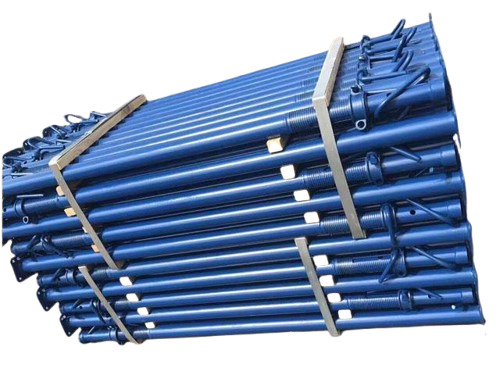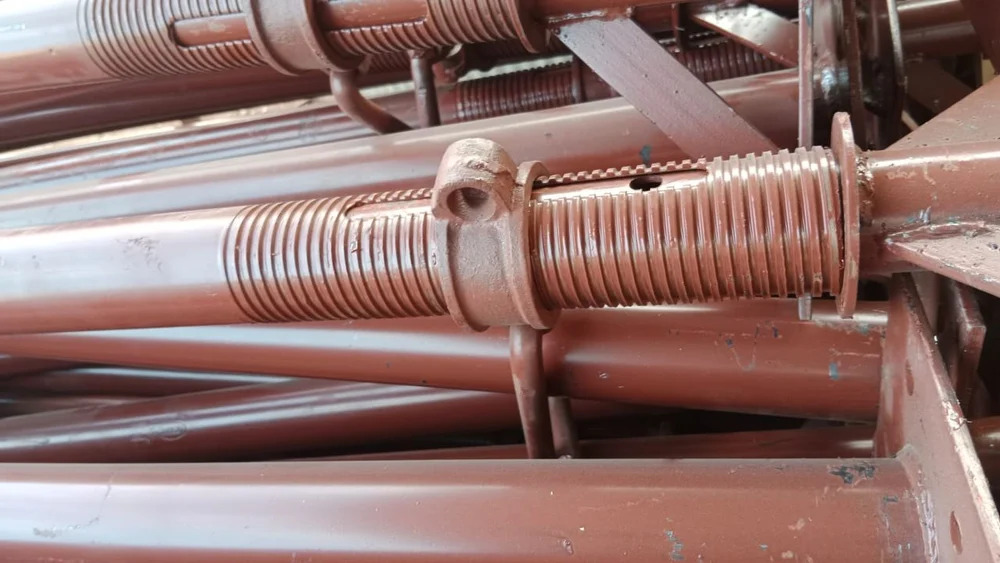
Scaffolding prop jacks are adjustable vertical supports used in construction for stability and safety. They are typically made of steel, feature a telescopic, height-adjustable design, and are used for supporting formwork, scaffolding platforms, and shoring existing structures. Key features include a base plate, an inner and outer tube system for height adjustment, and safety pins to lock the height in place. Components and design Telescopic design: Consists of an outer tube and an inner tube that can be extended or retracted to adjust the height. Base plate: A plate at the bottom of the prop, sometimes called a “screw jack“ or “leveling jack,“ that provides a stable base and can be attached to a mud sill. Head plate: A plate at the top of the prop that connects to the structure it is supporting. Adjustment mechanism: A threaded screw or a pin and coupler system allows the inner tube's height to be adjusted by rotating it to expand or contract the length. Safety features: Locking pins or couplers are used to secure the height and prevent unintended adjustments. Key features and benefits Adjustability: The telescopic design allows for precise height adjustments, making it easy to level scaffolding and formwork, even on uneven surfaces. Durability: Made from strong materials like mild steel, these props can withstand heavy loads and are durable for repeated use. Versatility: Used in a variety of applications, including supporting concrete formwork for slabs, beams, and walls, as well as shoring walls and supporting scaffolding platforms. Safety: They provide a stable and secure platform, enhancing worker safety during construction, maintenance, and repair work. Cost-effectiveness: They can reduce labor and material costs compared to traditional methods of cutting and wedging timber. Usage and applications Formwork support: Used to support the temporary molds for concrete pouring until the concrete hardens. Shoring: Used to temporarily support existing structures like walls or floors that are being repaired or renovated to prevent collapse. Scaffolding systems: Provide vertical support for scaffolding platforms, ensuring the stability of walkways and the safety of workers at height. Bridge construction: Support beams and deck forms during bridge construction. Foundation work: Used to temporarily support structures during foundation repairs or excavation.

Coimbatore
08043692962
+919994767762
 Chat with us
 Chat with us