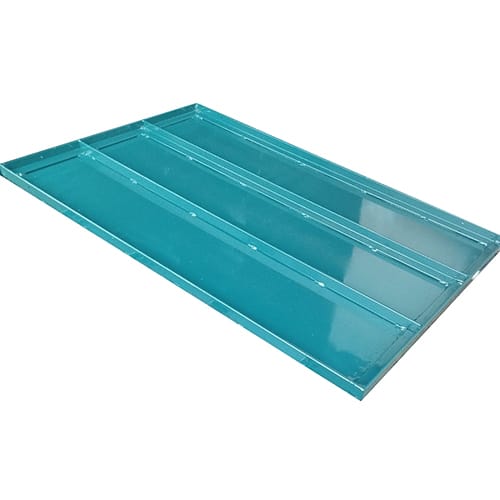
Hot-dipped galvanized (HDG) centering sheets are durable, corrosion-resistant steel plates used in construction as part of the formwork system to provide support for concrete structures during the curing process. The galvanization process provides long-lasting protection against rust in demanding environments. Key Features and Details Corrosion Resistance: The primary advantage of HDG centering sheets is their superior protection against rust and corrosion due to the zinc coating. This makes them suitable for various environmental conditions, including outdoor and industrial applications. Durability and Strength: Made from high-quality steel (often mild steel or hot-rolled steel), these sheets offer reliable structural support and stability, capable of withstanding heavy loads during concrete pouring and curing. Formwork Application: They are used as a flat, rigid surface within a formwork or shuttering system to create a smooth, even surface for the concrete slab, beam, or column. Once the concrete hardens, the sheets are typically removed and can be reused. Manufacturing Process: The steel sheets are immersed in a bath of molten zinc (around 450°C) after a thorough cleaning process. This metallurgical reaction forms a strong, bonded coating. Appearance: The initial appearance can vary (bright, shiny, matte, etc.), but this does not affect performance. Over time, a uniform, matte gray protective zinc patina develops. Cost-Effective and Reusable: Due to their longevity and resistance to damage, HDG sheets are a cost-effective and reusable solution across multiple construction cycles. Typical Specifications Material: Mild Steel (MS) or Hot Rolled (HR) Steel. Shape: Typically rectangular. Common Sizes: Common dimensions include 3 x 2 feet (approx. 900 x 600 mm) or 4 x 3 feet, but customized specifications are available. Thickness: Varies depending on loading requirements, often ranging from 2 mm to 10 mm or more. Tensile Strength: Typically around 235 MPa.

Coimbatore
08043692962
+919994767762
 Chat with us
 Chat with us