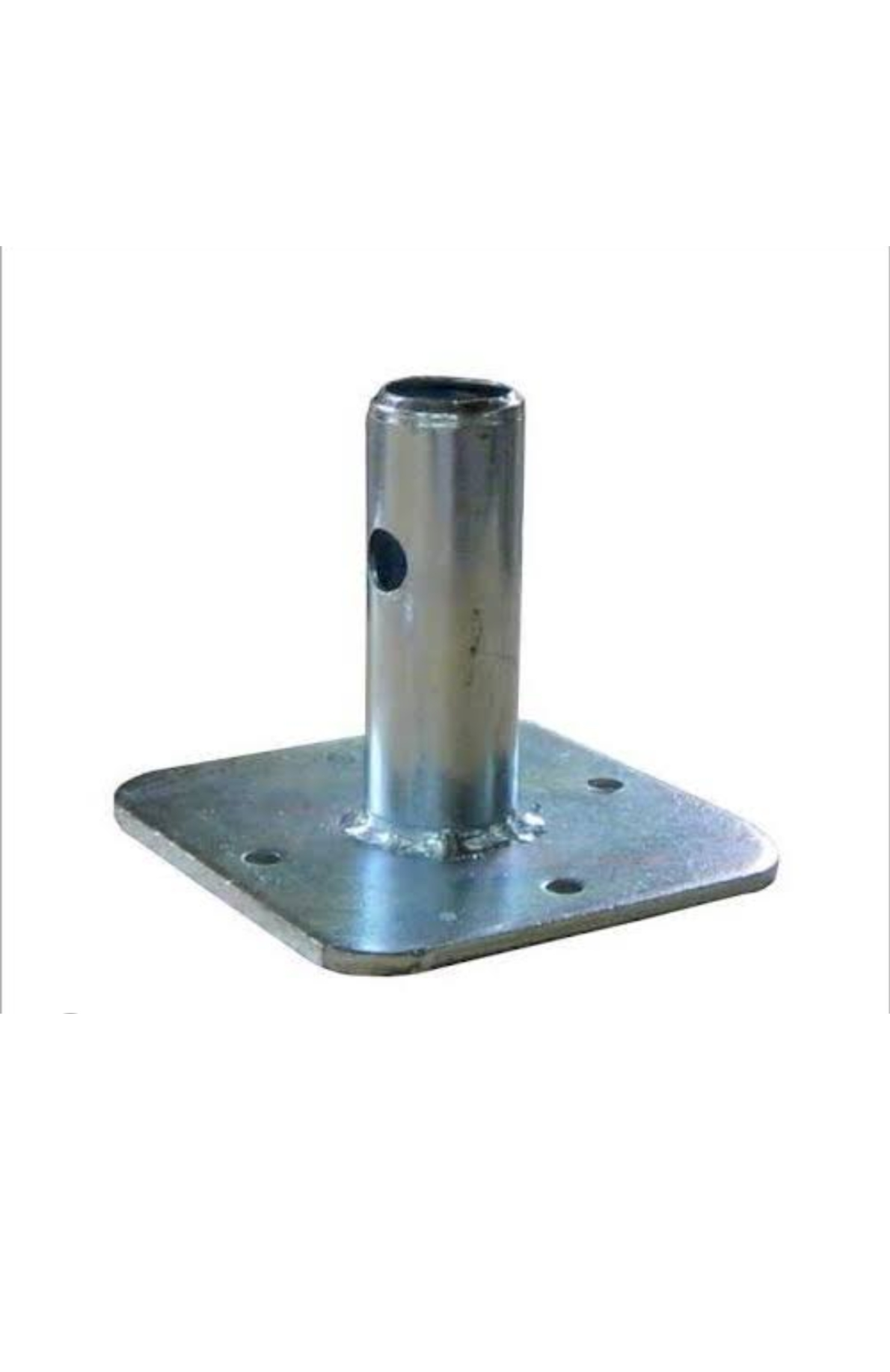
A scaffolding base plate is a flat metal plate that connects the vertical poles of a scaffold to the ground, acting as a stable foundation. Its primary function is to evenly distribute the load from the scaffold to the ground, preventing the poles from sinking into soft surfaces and ensuring the overall stability and safety of the structure. Key details include the plate's material, typically steel, and its components like the central spigot (or pin) that secures the scaffold standard. Key components and features Plate: A flat, square (e.g., (150mmtimes 150mm)) or rectangular metal plate that sits on the ground.Spigot or Pin: A central, vertical protrusion welded to the plate that the bottom of the scaffold standard (pole) fits onto, securing the vertical in place and ensuring alignment.Material: Usually made of durable steel, often galvanized, to withstand heavy loads and resist corrosion.Holes: Some base plates have holes for anchoring to the ground with bolts or stakes, which is especially important on uneven or soft surfaces.Adjustable Base Jacks: Base plates are often used with adjustable base jacks, which are threaded at the bottom and can be screwed up or down to level the scaffold, particularly if the ground is not perfectly flat. Function and importance Load distribution: The plate increases the contact area between the scaffold and the ground, spreading the weight more evenly and reducing pressure on the soil or surface. Stability: This even load distribution prevents the scaffold from sinking or shifting, which is crucial for maintaining stability. Foundation: They provide a strong and stable foundation for the entire scaffolding system, especially on soft ground, uneven surfaces, or when heavy loads are involved. Interchangeability: They are a universal component that works with various types of scaffolding systems, including tube and clamp, frame, and system scaffolds like ringlock or cuplock.

Coimbatore
08043692962
+919994767762
 Chat with us
 Chat with us