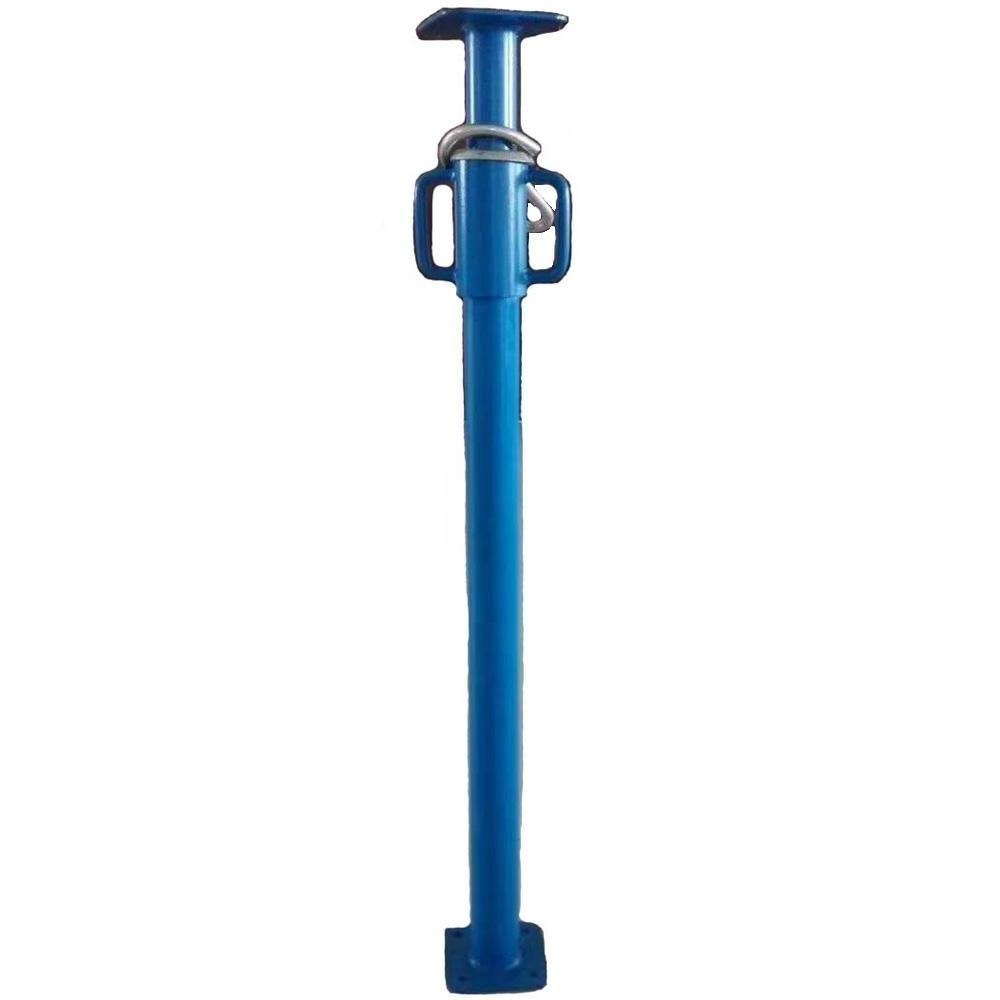
An adjustable prop jack is a steel component used for temporary vertical support in scaffolding and formwork. Its telescopic design allows for height adjustment via an inner tube that extends or retracts within an outer tube, secured by a pin or threaded coupler. These props are essential for ensuring stability and safety, especially for tasks like slab and beam formwork, by bearing vertical loads. Key features and components Material: Typically made of steel (mild steel is common) for strength and durability, though aluminum versions are available for lighter-duty tasks. Adjustability: A telescopic, or “screw-type,“ design allows for precise height adjustments to support structures on uneven surfaces and for leveling. Components: Consists of two main parts: an outer tube and an inner tube with a threaded shaft. A U-shaped head at the top securely holds beams, and a base plate is attached to the outer pipe. Height adjustment: Height is changed by rotating the inner tube to expand or contract its length, which is then locked in place with a pin or coupler. Load capacity: This varies based on the prop's size and material. It's crucial to choose a prop with an appropriate load capacity for the project's requirements. Safety features: Many have safety pins or locking mechanisms to prevent unintended height changes and ensure stability. Surface finish: Available in various finishes like painted, powder-coated, or galvanized to improve durability and corrosion resistance. Applications Scaffolding: Provides vertical support for scaffolding systems, ensuring stability during construction or maintenance. Formwork and shuttering: Supports formwork for slabs, beams, columns, and walls, which is essential when concrete is poured. Building support: Used for temporary shoring during building repairs or rehabilitation.
Coimbatore
08043692962
+919994767762
 Chat with us
 Chat with us