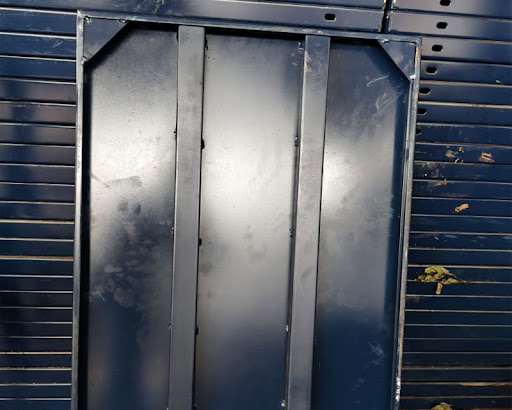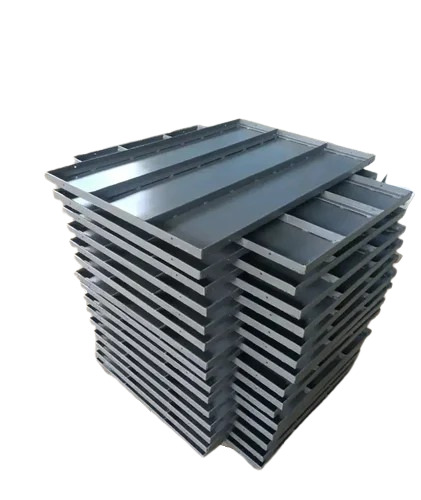
“Iron centering sheets“ are a type of formwork (or shuttering) material used in construction to provide temporary support for wet concrete in slabs, beams, and columns until it sets and gains sufficient strength. Key Details Function: The primary function is to create a stable, level platform that holds the green (wet) concrete in its designed shape and prevents sagging or deformation during the curing process. Material: They are typically made from high-strength mild steel (MS). These sheets may be coated with red oxide paint or galvanized (zinc-coated) to provide corrosion resistance and increase durability. Durability and Reusability: Unlike traditional timber formwork, iron (steel) sheets are highly durable and can be reused multiple times across many projects, making them a cost-effective solution in the long run. Efficiency: Their use speeds up the construction process by allowing for quick assembly and dismantling and providing a consistent, smooth finish to the concrete surface, which often reduces the need for extensive post-casting finishes. Safety: By ensuring a stable and reliable support system, they enhance safety on the construction site, reducing the risk of structural failure during the critical curing phase. Versatility: They are used in various construction applications, from residential buildings to large infrastructure projects like bridges and commercial complexes. Common Specifications Dimensions: Standard sizes often include 3x2 feet (approx. 900mm x 600mm) and 4x2 feet. Odd dimensions can be accommodated using adjustable form components. Thickness: Common thicknesses range from 2mm to 3mm, though other options up to 15mm are available depending on the specific load-bearing requirements. Weight: A standard 3x2 ft sheet typically weighs between 13 kg and 16 kg. Types: Variations include flat sheets, angle-welded sheets for added rigidity, and modular systems that integrate with other scaffolding components like props and spans. Usage The sheets are part of a larger formwork system that includes props (vertical supports), spans (horizontal members), and adjusters. Once the concrete has gained sufficient strength (which varies based on the structural element and is governed by construction codes), the centering is “stripped“ or removed.

Coimbatore
08043692962
+919994767762
 Chat with us
 Chat with us