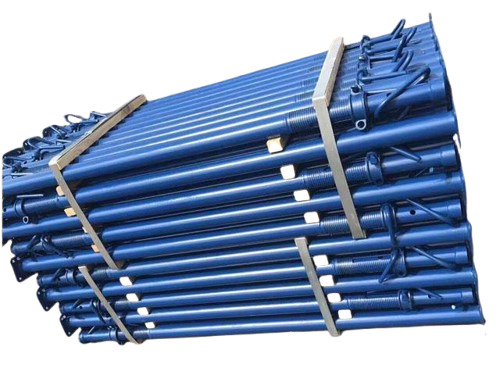
A scaffolding prop jack is an adjustable, telescopic steel post used as a temporary vertical support in construction. Its primary function is to bear heavy vertical loads from formwork, slabs, and beams, transferring the weight to the ground and ensuring the stability and safety of the structure during the curing or construction process. Key Components A complete scaffolding prop jack system typically consists of several parts: Inner Tube: A smaller diameter tube that slides inside the outer tube. It has holes for a locking pin to set the approximate height. Outer Tube: A larger diameter tube with a threaded portion (or sleeve) on the outside. Prop Nut (or Jack Nut/Cup): A cast or forged accessory with a handle that screws up or down the outer tube's thread. Turning it allows for fine, precise height adjustments once the prop is in place. Locking Pin (or G-Pin/Straight Pin): A high-strength steel pin inserted through aligned holes in both the inner and outer tubes to secure the initial height setting and prevent accidental collapse. Base Plate: A flat plate at the bottom of the outer tube that provides a stable footing and helps distribute the load to the supporting surface. Head Plate: A plate at the top of the inner tube that supports the load. This can be a flat plate, a U-head (or fork head) for holding formwork beams, or other specialized connectors. Key Details and Features Adjustability: The telescopic design allows the prop jack to be extended or retracted to various heights, accommodating different project requirements and uneven surfaces. Material: They are typically made from high-strength steel, such as mild steel (MS), for durability and strength. Load Capacity: Prop jacks are designed with specific load capacities (ranging from light-duty to heavy-duty, sometimes exceeding 34 kN or 2 metric tons) which vary based on their size, material thickness, and design. Surface Finish: To resist corrosion and extend their lifespan, they are often painted, powder-coated, or hot-dip galvanized. Safety: They incorporate safety features like locking pins and robust designs to ensure stability and prevent unintended movement during construction activities. Applications Scaffolding prop jacks are widely used in the construction industry, including: Formwork Support: Holding concrete formwork (for slabs, beams, columns, and walls) until the concrete has cured sufficiently. Shoring: Providing temporary support to existing structures during renovation, repair, or demolition work. Scaffolding Systems: Supporting elevated working platforms or walkways within a scaffolding structure. When using prop jacks, it is crucial to follow manufacturer guidelines and local safety regulations, ensuring they are correctly installed (plumb and adequately braced) and not overloaded.

Coimbatore
08043692962
+919994767762
 Chat with us
 Chat with us