Coimbatore
08043692962

Hot Rolled Centering Sheets

Centering Sheets

Hot Rolled Centering Sheets

In stockcod not available
Phone Number

Email Address sstraders762@gmail.com

Mon-Thu: 10 AM - 2 PM • Fri: 3 PM - 7AM

Address

Azad Nagar Main Road , Muthuswamy Colony , Coimbatore, Coimbatore

Description

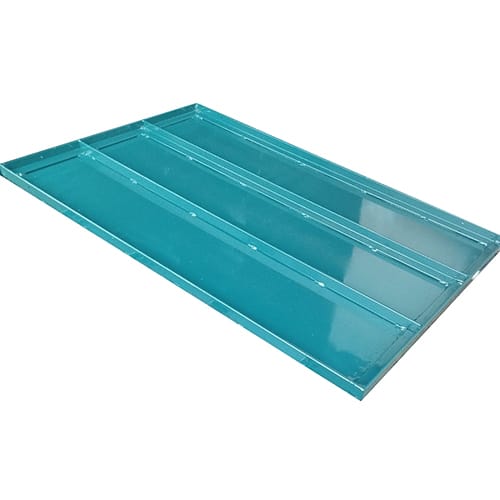
Hot rolled centering sheets are steel sheets, often painted red, used as formwork in concrete construction to create smooth, even surfaces for casting. They are made from hot-rolled steel, meaning they are rolled at high temperatures, which gives them a durable and easy-to-shape quality. After the concrete has cured, the sheets are removed, leaving behind the desired finish. Key details and characteristics Purpose: Primarily used in construction as reusable formwork for casting reinforced concrete structures like slabs and beams.Material: Made from hot-rolled steel, which is strong and durable.Manufacturing process: Rolled at temperatures above (1700^{circ }F) ((>926^{circ }C)), making the material malleable and easy to shape.Finish: Often painted (frequently red) for corrosion protection and easy identification, as seen in the case of red centering sheets. Other colors, like blue, are also used, particularly when they are hot-dipped galvanized.Application: They are installed within a framework to create a smooth, even surface for wet concrete. Once the concrete hardens, the sheets are stripped away.Advantages: They provide strong support and a stable, accurate shape for the concrete during the curing process.Variations: They come in different sizes, with common dimensions being 3x2 feet. Thickness can also vary depending on the load requirements, with some having a hardness of up to 40 HRC. 

Keywords

Other Products

view all

6814772a5d263414004dd4a4 Card 2

product image
Centering Sheets

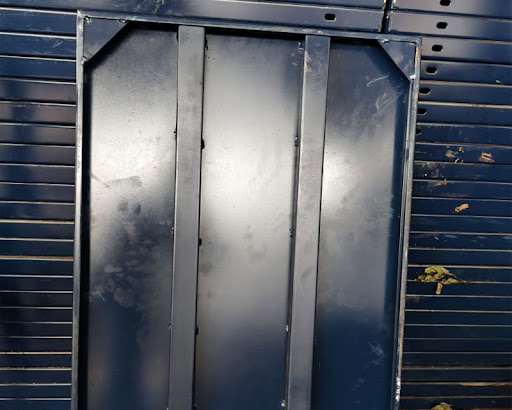
Durable iron centering sheets (also known as centering plates or steel formwork sheets) are robust, reusable components primarily used in construction to provide temporary support for wet concrete until it cures and gains sufficient strength. They are engineered for high strength, longevity, and efficiency in forming concrete structures like slabs, beams, and columns. Key Features and Specifications Material: Although often referred to as “iron,“ these sheets are typically made from high-strength mild steel (MS) due to steel's superior tensile strength and durability in construction applications. Design: They usually feature welded or riveted angles (e.g., 35x35x5 mm thick) along the edges to enhance structural integrity and prevent deformation under heavy loads. Dimensions: Standard Sizes: Common sizes include 600 x 900 mm (2 x 3 feet) and 600 x 1250 mm. Thickness: Available in various thicknesses, typically ranging from 2 mm to 10 mm or more, depending on load requirements. Surface Finish: To ensure longevity and protect against harsh environmental conditions, they often have a protective finish, such as red oxide paint, color coating, or hot-dip galvanization, which makes them corrosion-resistant. Load-Bearing Capacity: They are designed with high load-bearing capacity to safely support the substantial weight of wet concrete and construction activities. Benefits in Construction Durability and Reusability: Their primary advantage is exceptional durability, allowing for multiple reuses (often over 100 times, compared to a few for wood), which makes them highly cost-effective in the long run. Structural Integrity: They ensure precise shaping, alignment, and structural integrity of concrete elements by providing a stable and rigid formwork system. Efficiency: The modular and often lightweight-yet-rigid design of modern steel sheets allows for faster assembly and dismantling compared to traditional wooden formwork, which speeds up project timelines and reduces labor costs. Safety: The stable platform they create enhances safety on construction sites by minimizing the risk of formwork failure during the concrete pouring and curing phases. Versatility: They can be used in a wide range of applications, including high-rise buildings, bridges, tunnels, industrial facilities, and residential projects. Limitations Weight: They are heavier than alternatives like plywood or plastic, which can slow down manual handling and may require mechanical assistance in large projects. Maintenance: They require regular cleaning and oiling (or proper storage for painted/galvanized versions) to prevent rust and ensure a smooth concrete finish for repeated use.
6814772a5d263414004dd4a4 Card 2

product image
Centering Sheets

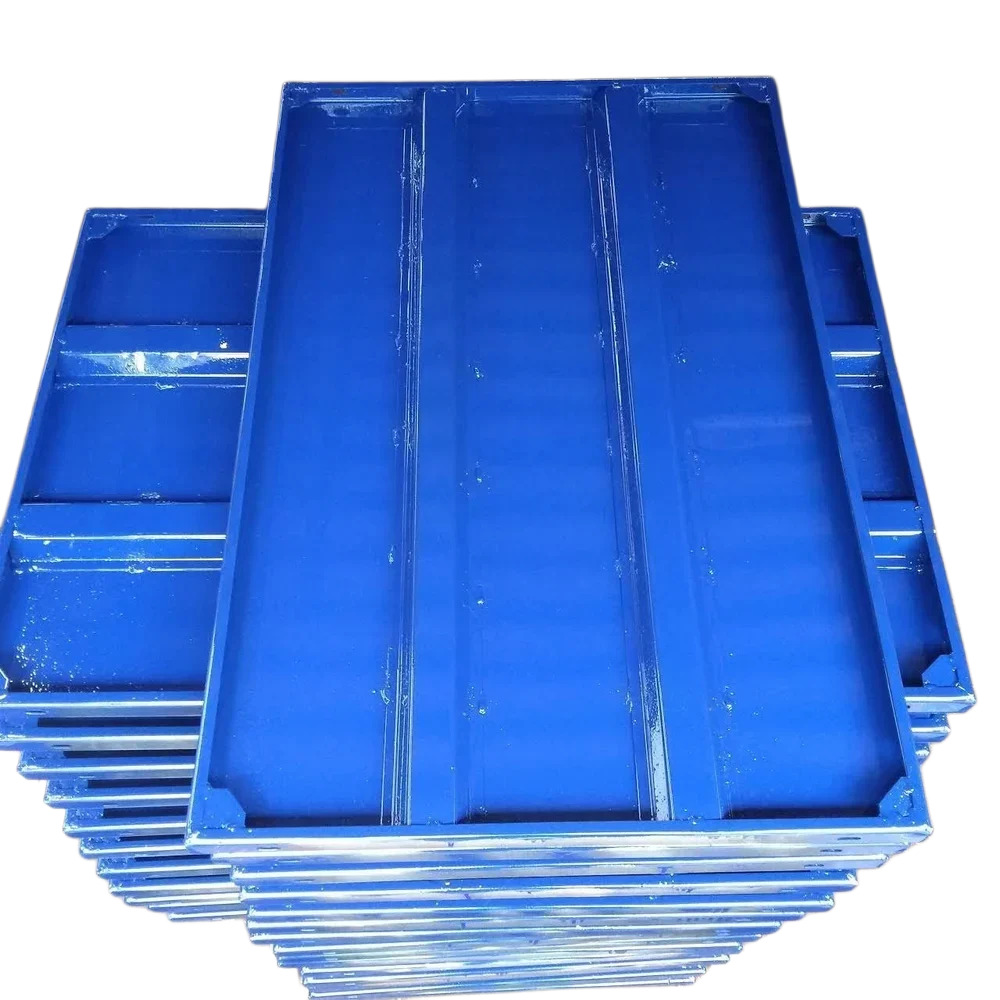
Hot-dipped galvanized (HDG) centering sheets are durable, corrosion-resistant steel plates used in construction as part of the formwork system to provide support for concrete structures during the curing process. The galvanization process provides long-lasting protection against rust in demanding environments. Key Features and Details Corrosion Resistance: The primary advantage of HDG centering sheets is their superior protection against rust and corrosion due to the zinc coating. This makes them suitable for various environmental conditions, including outdoor and industrial applications. Durability and Strength: Made from high-quality steel (often mild steel or hot-rolled steel), these sheets offer reliable structural support and stability, capable of withstanding heavy loads during concrete pouring and curing. Formwork Application: They are used as a flat, rigid surface within a formwork or shuttering system to create a smooth, even surface for the concrete slab, beam, or column. Once the concrete hardens, the sheets are typically removed and can be reused. Manufacturing Process: The steel sheets are immersed in a bath of molten zinc (around 450°C) after a thorough cleaning process. This metallurgical reaction forms a strong, bonded coating. Appearance: The initial appearance can vary (bright, shiny, matte, etc.), but this does not affect performance. Over time, a uniform, matte gray protective zinc patina develops. Cost-Effective and Reusable: Due to their longevity and resistance to damage, HDG sheets are a cost-effective and reusable solution across multiple construction cycles. Typical Specifications Material: Mild Steel (MS) or Hot Rolled (HR) Steel. Shape: Typically rectangular. Common Sizes: Common dimensions include 3 x 2 feet (approx. 900 x 600 mm) or 4 x 3 feet, but customized specifications are available. Thickness: Varies depending on loading requirements, often ranging from 2 mm to 10 mm or more. Tensile Strength: Typically around 235 MPa.

6814772a5d263414004dd4a4 Card 2

product image
Centering Sheets

Hot rolled centering sheets are steel sheets, often painted red, used as formwork in concrete construction to create smooth, even surfaces for casting. They are made from hot-rolled steel, meaning they are rolled at high temperatures, which gives them a durable and easy-to-shape quality. After the concrete has cured, the sheets are removed, leaving behind the desired finish. Key details and characteristics Purpose: Primarily used in construction as reusable formwork for casting reinforced concrete structures like slabs and beams.Material: Made from hot-rolled steel, which is strong and durable.Manufacturing process: Rolled at temperatures above (1700^{circ }F) ((>926^{circ }C)), making the material malleable and easy to shape.Finish: Often painted (frequently red) for corrosion protection and easy identification, as seen in the case of red centering sheets. Other colors, like blue, are also used, particularly when they are hot-dipped galvanized.Application: They are installed within a framework to create a smooth, even surface for wet concrete. Once the concrete hardens, the sheets are stripped away.Advantages: They provide strong support and a stable, accurate shape for the concrete during the curing process.Variations: They come in different sizes, with common dimensions being 3x2 feet. Thickness can also vary depending on the load requirements, with some having a hardness of up to 40 HRC.